 Careers
Students at College can graduate without ever touching a PLC
Walk into a university engineering department and you'll find students learning thermodynamics, circuit theory, fluid mechanics, the syllabus is thorough...

Rockwell's new ControlLogix 5590 is the biggest Allen-Bradley leap in years. Here are 10 things engineers need to know about the L9.

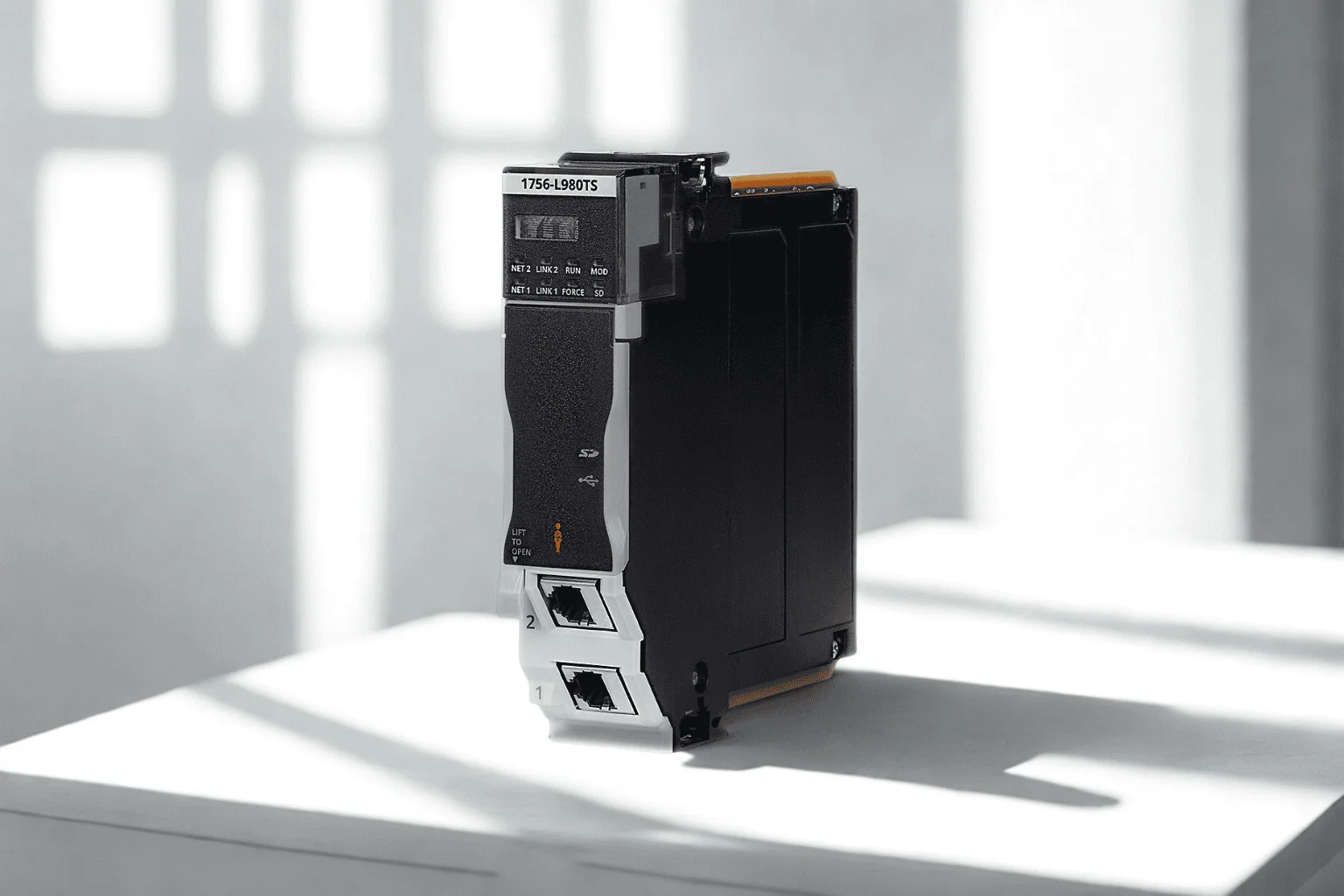
The ControlLogix 5590 is a serious step up from the 5580 (L8). Rockwell Automation says overall performance is 2 to 3 times faster than the previous generation. That means faster scan times, quicker responses to faults, and more headroom for complex applications. If you’ve ever been sat in front of a machine wondering why the programme’s lagging behind the process, you’ll appreciate what that means in practice.
The L9 range offers memory options from 2 MB all the way up to 80 MB. That’s double the top-end capacity of the 5580. More memory means you can run larger, more complex programmes without having to strip things back or split applications across multiple controllers.
If your shop-floor has multiple lines running multiple PLCs of different ages, this kind of headroom matters. It gives you space to consolidate and simplify, rather than bolting on extra hardware every time the process grows.
This is one of the biggest changes. Every ControlLogix 5590 controller ships with SIL 2/PLd functional safety built in. You don’t need a separate safety module to get basic safety functionality. If you need to go higher, SIL 3/PLe is supported with a safety partner.
Embedding safety directly into the controller hardware is the direction the industry needs to go. It simplifies the architecture and removes the risk of safety being treated as an afterthought.
The 5590 comes with two built-in 1 GB Ethernet ports supporting EtherNet/IP. That’s a significant upgrade from the previous generation. The ports support both linear and DLR (Device Level Ring) topologies, giving you flexibility in how you design your network architecture.
For larger plants running hundreds of devices, expanded connectivity is a big deal. The L9 supports over 600 EtherNet/IP nodes per controller, which means fewer controllers needed to cover the same ground. Less hardware, less complexity, fewer things to go wrong.
The ControlLogix 5590 is IEC 62443-4-2 compliant and includes CIP Security with secure boot. It also supports Zero Trust architectures, which means the controller is designed to verify every connection and communication, rather than assuming anything inside the network is safe.
Cyber threats to manufacturing are growing. According to Siemens’ True Cost of Downtime report (2024), unscheduled downtime drains 11% of annual revenues from the world’s 500 biggest companies. Not all of that is cyber-related, but as more shop-floors become connected, the attack surface gets bigger. Having security built into the controller from the ground up is no longer a nice-to-have.
If you’re working in robotics, packaging, or any application that requires high-speed coordinated motion, the 5590 supports up to 512 real and virtual motion axes. That’s double the 256-axis limit of the 5580.
This makes the L9 a genuine option for consolidating motion control into a single platform, rather than running separate controllers for different lines. Fewer controllers means fewer potential points of failure, and a simpler architecture for your maintenance team to understand and troubleshoot.
Alongside EtherNet/IP, the 5590 supports OPC UA, one of the most widely adopted standards for secure, cross-platform industrial communication. This makes it easier to connect the controller to third-party systems, SCADA platforms, and enterprise-level IT infrastructure.
For engineers, this means less time wrestling with proprietary protocols and more time getting useful data out of the machines. For managers, it means better visibility across the operation without needing to rip and replace existing systems.
If you’re already running Allen-Bradley ControlLogix 5570 or 5580 controllers, the 5590 is designed to slot into your existing architecture. It supports the same I/O as the 5580, and you can programme it using Studio 5000 Logix Designer version 38.
This is important because it means upgrading doesn’t require a complete system redesign. You can move to the L9 when it makes sense, one controller at a time, without turning your shop-floor upside down.
That said, it’s worth noting that Rockwell has moved the 5570 (L7) to Active Mature status, with version 38 being its final firmware release. If you’re still running 5570 controllers, now’s the time to start thinking about your upgrade path.
The 5590 comes in three flavours. The Standard (TS) variant covers most applications. The XT (TSXT) is rated for harsh environments with extended temperature ranges and corrosion resistance, running from -25°C to +70°C. And the P variant (TPSXT) is built for process control, with embedded process objects, Sequence Manager software, and a default process tasking model.
All three variants support safety, redundancy, and secure communications. So whatever your environment, you’re getting the same core safety and security features across the board.
The ControlLogix 5590 started shipping in late 2025 and is available through authorised Allen-Bradley distributors. If you’re specifying new systems or planning upgrades, the L9 is the controller to go with for the longest availability and support lifecycle.
Meanwhile, the 5570 is now on a path toward end of life. It’s still fully supported, but no new firmware or software updates are coming. If your shop-floor relies on 5570 controllers, it’s worth having a conversation now about when and how to transition.
The skills gap in UK manufacturing makes this even more pressing. According to Make UK’s 2025 Industrial Strategy Skills Commission Report, there are 55,000 long-term unfilled vacancies in UK manufacturing, costing the economy £6 billion in lost output every year. If your team doesn’t have the Allen-Bradley skills to handle a controller migration, training needs to be part of the plan.
New hardware is only as useful as the engineers who know how to work with it. If you’re responsible for Allen-Bradley PLCs on your shop-floor, or you’re planning to upgrade to the ControlLogix 5590, make sure your skills are ready for what’s coming.
Scantime’s City & Guilds Assured Allen-Bradley IMFFP courses give you hands-on, practical training with live Allen-Bradley PLCs using RSLogix/Studio 5000. You’ll learn how to fault-find, maintain your equipment, and get your line away with confidence. Our tutors are time-served controls engineers who’ve been on the shop-floor themselves.
Both training centres are in Gateshead and Alderley Park. Courses run weekly. Demand is high, so book at least 2 months in advance to secure your place.
Explore our Allen-Bradley courses or contact our team to find the right course for you.

Our blog
Tools and strategies modern teams need to help their companies grow.
CareersWalk into a university engineering department and you'll find students learning thermodynamics, circuit theory, fluid mechanics, the syllabus is thorough...
 Learn
LearnBooking PLC training usually means a dim room, endless slides read aloud, and wondering if anyone notices you checking your...

 Industry News
Shop-floor safety has evolved hugely since David Simm's 1968 start. PLCs now protect lives - staying current could save yours...

Find the perfect courses for you and your team.

© 2026 Scantime Group Ltd
