Courses

For Maintenance and Controls Engineers

Siemens TIA Portal IMFFP® 4

£2,400 + VAT

Industrial Maintenance & Fault Finding Pro 4: Ready to take your PLC expertise to the highest level? Our hands-on and practical City & Guilds Assured IMFFP® 4 training course takes experienced maintenance engineers deeper into advanced Siemens TIA Portal topics, from Structured Text and PLC security to industrial communications, PID control, and servo/drive integration. We know life’s too short for breakdowns, so build on what you’ve already achieved and gain the advanced skills you need to handle the most complex systems on your shop-floor.

Check upcoming courses

Course approved and accredited by

Overview

Designed to deliver advanced knowledge and specialist skills for experienced engineers working with Siemens PLCs in complex industrial environments.

The comprehensive 4-day IMFFP® 4 training program takes you beyond the fundamentals and into the advanced topics that separate a capable maintenance engineer from an exceptional one. Every topic is taught from a maintenance engineer's perspective, focused on what you need to understand, diagnose, and manage on a live production system.

graduation hat icon

4-day training program

This 4-day training course takes you from reading Structured Text programs and securing PLC networks to configuring third-party device communications, tuning PID loops, and integrating industrial drives.

award icon

City & Guilds Assured

When you complete the course, you'll earn a City & Guilds certification and digital credential that's recognised around the world.

open book icon

Dynamic Resources

You'll get access to PLC programming software and live PLCs with real industrial hardware including communication devices, drives, and Remote IO, together with a customised IMFFP® training workbook.

computer icon

Continuous Learning

Gain 1 year access to the relevant eLearning course to help you stay up to date with your new skillset.

Curriculum

Advanced PLC training for experienced engineers ready to work with complex systems, industrial communications, and modern programming languages.

Day 1: Reading and Understanding Structured Text (SCL)

Get hands-on experience with Structured Text, the programming language increasingly found on modern machines. You’ll learn to read and understand SCL programs confidently, recognising common programming patterns, data types, and control structures without needing to write code from scratch.

Start with the fundamentals of SCL syntax and work through real-world programming patterns step by step, from basic assignments and Boolean logic through to loops, arrays, and structures. Every concept is taught with practical exercises on live PLC hardware, building your confidence to navigate SCL programs during fault-finding.

  • Understanding when and why SCL is used instead of Ladder Logic, and recognising it in live programs.
  • Working with data types, variables, and naming conventions: reading programs that use BOOL, INT, REAL, TIME, and STRING values.
  • Reading IF/THEN/ELSE, CASE statements, and loop structures (FOR, WHILE, REPEAT) — the building blocks of every SCL program you’ll encounter.
  • Understanding arrays, structures, and User-Defined Types (UDTs): how modern programs organise large amounts of data.
  • Using type casting and conversions to understand how data moves between different formats.
  • Applying TIA Portal troubleshooting tools to SCL programs, online monitoring, watch tables, cross-references, and breakpoints.

Day 2: PLC & Network Security and Advanced Diagnostics

Focussings on PLC and network security, an increasingly critical topic as OT networks become more connected. You’ll explore real-world cyber incidents that targeted industrial control systems and learn how Siemens security features protect your plant.

  • Understanding why OT security matters through real-world incidents including Stuxnet, the Ukraine power grid attack, TRITON/TRISIS, and the Oldsmar water treatment breach.
  • Configuring CPU access and protection levels: password tiers, know-how protection, and copy protection.
  • Understanding TIA Portal project protection: what each protection mechanism does and how it affects your ability to fault-find.
  • Working with user management and role-based access to control who can connect, read, and modify PLC programs.
  • Understanding PROFINET security considerations and network segmentation: why flat networks are a risk and how to recognise and report a security incident.

The afternoon moves into advanced diagnostics, building on the diagnostic skills from IMFFP® 1&2 with deeper techniques.

  • Reading the diagnostic buffer in depth: understanding event classes, fault cascades, and working backwards to find root cause.
  • Understanding hardware interrupts: what triggers them, how OB40 works, and what to check when interrupts cause unexpected behaviour.
  • Using the Trace function: TIA Portal’s built-in signal recorder for capturing intermittent faults, with practical trigger configuration and result interpretation.

Day 3: PID Control, Data Handling, Recipe Management, and Working with Libraries

PID controllers: understanding how closed-loop control works and how to monitor, tune, and diagnose PID loops in TIA Portal.

  • Understanding PID theory (Proportional, Integral, Derivative) and where PID control is used in industry, temperature, pressure, flow, and level control.
  • Working with PID_Compact, PID_3Step, and PID_Temp instructions and their technology objects.
  • Using the commissioning panel and auto-tuning to observe and adjust loop performance.
  • Reading loop response shapes, rise time, overshoot, and settling time and diagnosing common PID faults using the ErrorBits reference.

Data handling and recipe management: how modern machines organise, store, and switch between production parameters.

  • Understanding complex data types: Structures, Arrays, and User-Defined Types (UDTs) and how they’re used to organise machine data.
  • Working with Data Blocks: Global DBs, Instance DBs, and the critical difference between Retain and Non-Retain settings.
  • Building a complete recipe management system from scratch, UDT, recipe bank, active recipe, and selection logic.
  • Using MOVE and MOVE_BLK instructions for transferring data between blocks.
  • Understanding data logging basics: writing process data to CSV on a SIMATIC memory card.

This day also introduces working with Siemens project and global libraries: understanding how reusable blocks, templates, and standard functions are stored, managed, and deployed across projects and sites.

Day 4: Communications to 3rd Party Devices, Servo/Drive Integration and Commissioning, and Encoders

Communications to third-party devices, communicating the protocols you’ll encounter when Siemens PLCs need to talk to non-Siemens equipment.

  • Understanding the industrial communication landscape: Serial, Fieldbus, and Industrial Ethernet protocols and where each fits.
  • Configuring PROFINET with third-party devices: installing GSDML files, assigning device names, mapping IO addresses, and verifying communication.
  • Working with GSD and GSDML files: where to find them, how to install them, and what they contain.
  • Understanding IO mapping and the process image: how input and output data flows between the PLC and field devices.
  • Configuring and commissioning Servo/Drives, including maintaining these systems and understanding encoder feedback.
  • Applying a systematic diagnostic approach to communication faults, LEDs, Accessible Devices, Module Diagnostics, and the diagnostic buffer.

Locations

Learn in the location that's right for you.

Discover the perfect place to learn and grow with our flexible training options. Whether you prefer hands-on practice at one of our state-of-the-art training centres or the convenience of onsite training, we’ve got you covered.

Gateshead

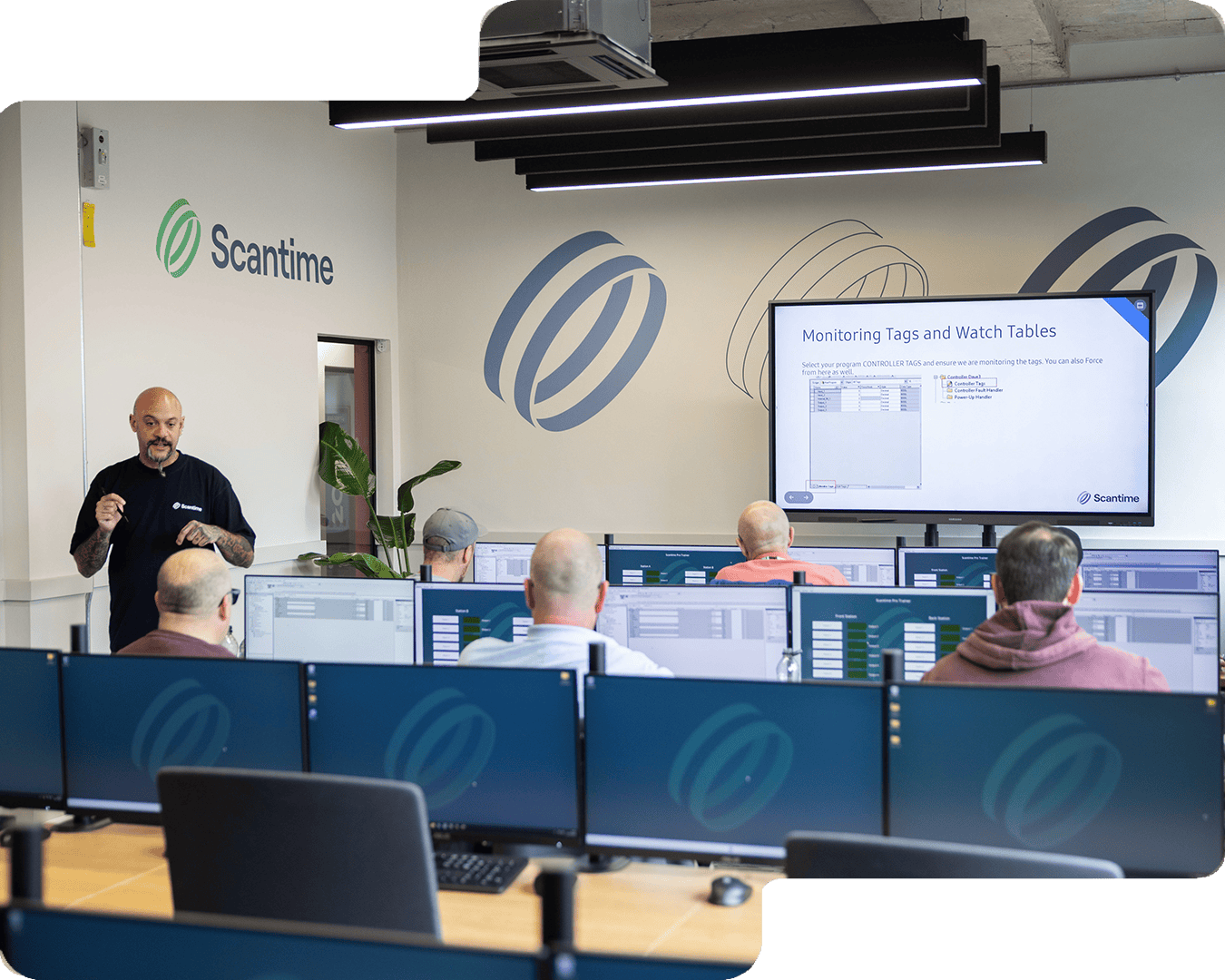
Our fully-equipped Gateshead training centre is located on the banks of the Tyne River, just 10 minutes from the Angel of the North.

Alderley Park

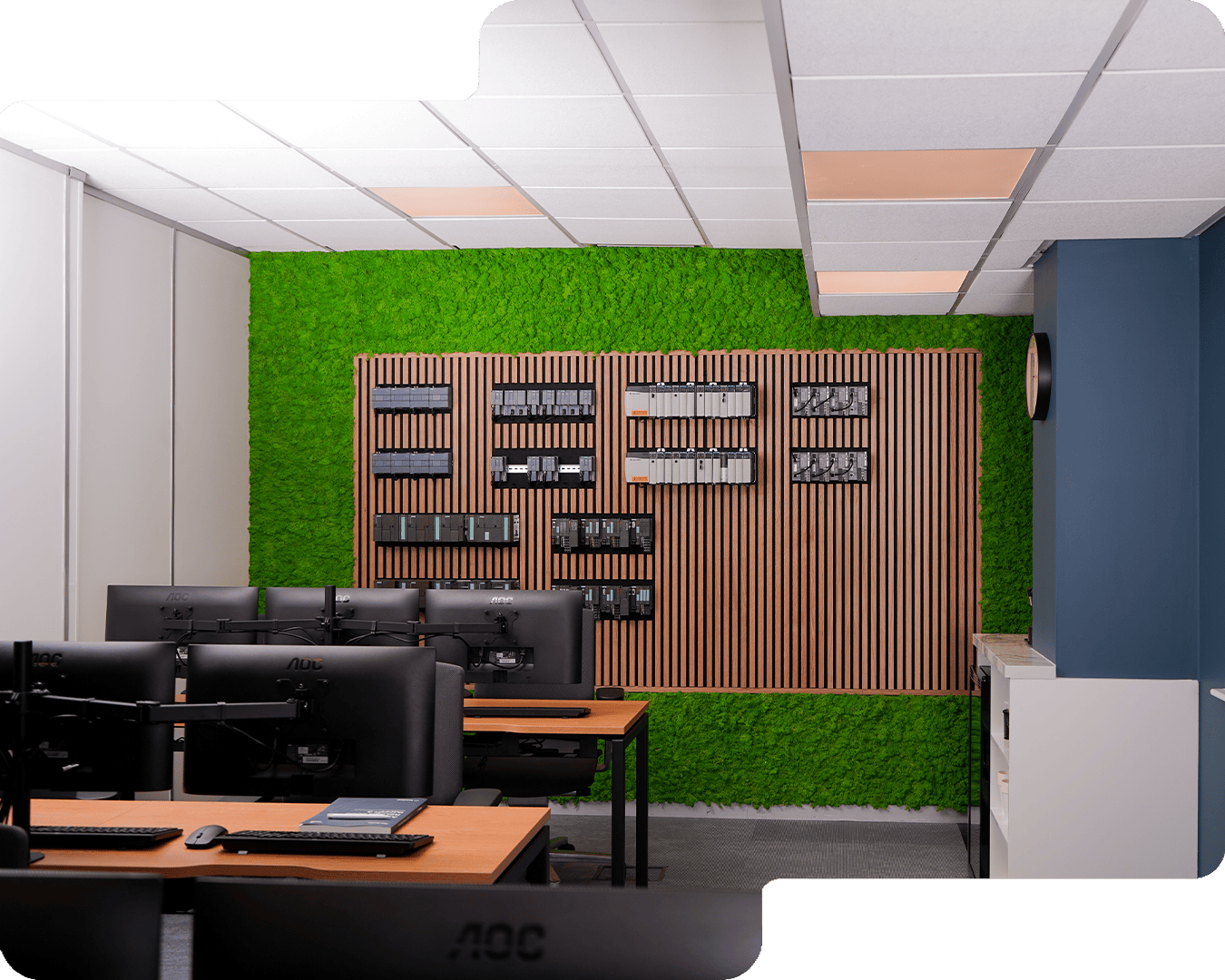
Alderley Park hosts a vibrant and fast growing community of companies, including Scantime, with our new fully-equipped training suite.

Certification

IMFFP® 4 is Assured by City & Guilds

When you complete our IMFFP® course, you’ll earn a City & Guilds Assured training certificates along with Digital Credentials. These credentials make it easy to showcase your skills online, instantly and professionally. Your certificate will represent the PLC training module you’ve completed, highlighting your achievement in passing all course assessments at a recognised Assured Training Centre.

Upcoming dates

Leave downtime behind with our upcoming courses

Once you've found a date that suits you or your team, select "Enquire now". One of our team will be in touch within 24 hours (excluding weekends) to answer any questions or make your booking.

Month
Location
Availability
Start DateCourseLocationAvailability
Loading...

Testimonials

We’ve trained engineers at Amazon, Honda, Jaguar Land Rover, EDF Nuclear, Toyota and Transport for London.

Here’s what they say about Scantime’s training courses:

I recently completed the Siemens Step 7 training course. I undertake lots of courses due to the nature of my job and this is one of the best I have been to. Alan and Jay delivered the course brilliantly, very helpful and explained everything in an easy to understand format.

Will Skidmore

Siemens Energy

My colleagues and I of Essity UK wish to share our gratitude for the skills and knowledge we have gained, and continue to gain as we upskill in Siemens Step 7 and TIA Portal. Many thanks to Alan, Chris, Dave and David.

Mark Horner

Essity

The course was brilliant – the content, literature, practical and delivery was exceptional. I really enjoyed it and a took away lots. Nathan was great, tonnes of real experience, really easy to get along with and delivered the training seamlessly. I would without any question, recommend Scantime and Nathan for any control system Solutions / advise / training needs in the future.

Thomas Braisby

Thorntons Chocolate

The PLC training course has been outstanding. Through attending the course I have been able to learn the foundations of PLCs as well as looking at programming and editing systems to see system responses. The instructors are highly knowledgeable and highly engaging. Overall I couldn’t recommend Scantime more.

Samuel Peacock

Anglo American

The facilities and tutors at Scantime are world class! This training has given me the knowledge and confidence to work with PLCs across our site reducing downtime and stepping up maintenance. The classrooms are kitted out with all the best equipment in an easy to understand environment. My tutors Nathan and Jay where a fountain of knowledge and I am so grateful for all their help. 10/10 would recommend!

George Claridge

Tottenham Hotspur Football Club

Scantime has been involved in training our maintenance staff for several years now. They have helped improve and maintain the skill set that is critical for working with processes such as ours. From these various courses, we now have maintenance staff who are more confident and capable of working and finding faults on our PLCs.

Marc Powell

JLR

FAQ

Frequently Asked Questions

Everything else you need to know.

How often do Scantime’s courses run?

We offer weekly courses at our training centres in Gateshead and Alderley Park. Demand is high, so we advise booking your place at least two months in advance to secure your spot.

Can I attend as an individual?

Absolutely! Our courses are open to everyone, whether you’re sponsored by a company or joining as an individual. They’re especially popular with people looking to switch careers or enhance their CV with new skills.

What resources do you provide during the hands-on IMFFP® course?

When you join one of our training courses, you’ll have your own dedicated training station complete with a computer, PLC, HMI, Remote IO, programming software, and a SCADA system.

You’ll also receive a Scantime workbook to track your progress throughout the course. This detailed resource is yours to keep, making it an excellent reference tool long after training is complete.

Are there any assessments on a hands-on IMFFP® course?

Yes, the course includes two assessments, one at the half-way mark of the course and the second at the end of the course, designed to ensure you’ve understood the material. You’ll receive your results on the same day after completing each assessment.

Pass Marks and Points Available:

  • Module 4 – 1st Asssessment
    • Pass Mark: 120
    • Points Available: 150
  • Module 4 – 2nd Assessment
    • Pass Mark: 120
    • Points Available: 150

Will I receive a certificate upon completion?

Absolutely. We’ll give you a City & Guilds certificate, and a digital credential when you successfully complete any of our IMFFP® course modules.

Want to ask a question?

We’re here and happy to help

Get the skills you need to safeguard your shop-floor with Scantime.

Because life’s too short for breakdowns.

Man Engineer